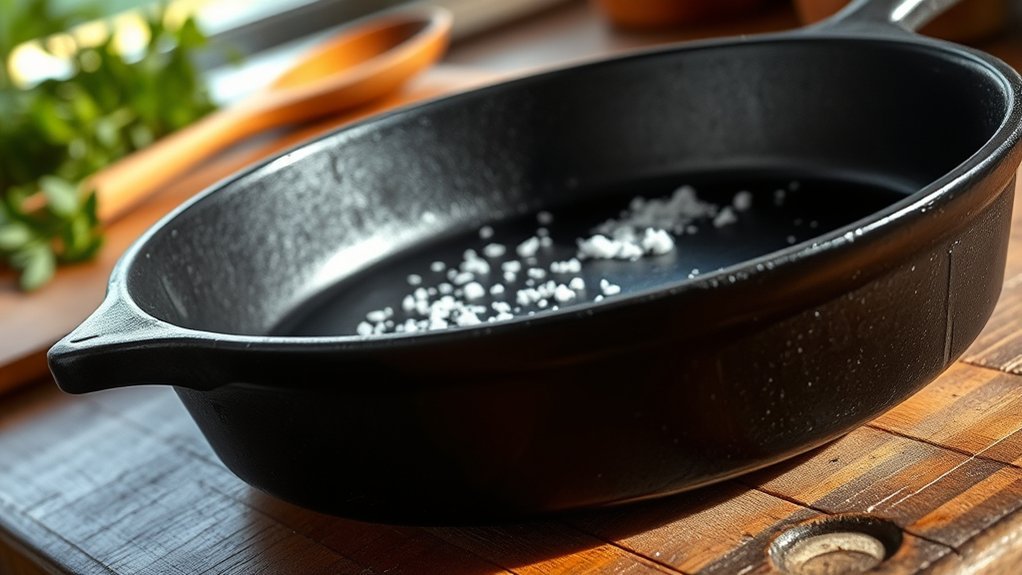

You might wonder if using salt is part of seasoning your cast iron skillet, but it actually plays a different role. Salt is excellent for cleaning off moisture and residue after cooking, helping the pan stay in good shape. However, when it comes to building that durable, non-stick seasoning layer, salt isn’t involved.
Understanding this distinction is key to maintaining your skillet’s performance—let’s explore why salt shouldn’t be mistaken for a seasoning agent. Using salt helps remove stuck-on food and moisture, but it doesn’t contribute to the polymerized oil layer that creates the skillet’s non-stick surface.
So, while salt is a helpful cleaning tool, it is not used for seasoning your cast iron skillet. Proper seasoning involves applying oil and heating the pan to build up layers that protect and enhance its cooking surface.
Key Takeaways
- Salt is used for cleaning and preparing the skillet surface, not for seasoning or forming the protective coating.
- Apply salt right after cooking on a warm pan to remove moisture and residues before oiling.
- Seasoning requires applying a thin layer of oil that polymerizes under heat, not salt.
- Coarse salt scrubs residues gently without damaging the existing seasoning layer.
- After cleaning with salt, dry thoroughly and apply oil, then bake to build or maintain the seasoning.
What’s the Difference Between Seasoning and Cleaning Cast Iron?
Although both are essential for maintaining your cast iron cookware, seasoning and cleaning serve distinct purposes: seasoning builds a protective, non-stick layer on the surface, while cleaning removes food residue and prevents rust without stripping that layer.
Seasoning science involves applying a thin layer of oil that polymerizes under heat, creating a durable barrier. This process enhances the skillet’s performance over time.
When cleaning, you avoid harsh detergents or abrasive tools that can damage this coating. Instead, you use gentle methods, sometimes incorporating salt alternatives like coarse sugar or baking soda to scrub without harming the seasoning.
Understanding these differences ensures you preserve your cast iron’s integrity, extending its lifespan and maintaining optimal cooking performance. Proper maintenance depends on balancing these two essential tasks effectively.
Using Salt During the Seasoning Process: When and Why
You use salt during seasoning primarily to remove stubborn residue and help create a smooth surface before applying oil. Timing matters. Apply salt right after cooking while the pan is still warm for best results. This step preps your cast iron for even oil absorption and a stronger seasoning layer.
Salt’s Role In Seasoning
When should you use salt during the cast iron seasoning process, and why does it matter? Understanding salt science helps you appreciate its mineral effects on your skillet. Salt acts as a mild abrasive that removes residues and surface impurities before you apply oil for seasoning.
This ensures a cleaner base, promoting better oil adhesion and a more durable, even seasoning layer. The minerals in salt also help to open the skillet’s pores slightly, enhancing oil absorption during seasoning.
However, salt itself doesn’t contribute to the polymerized coating that defines seasoned cast iron; instead, its role is preparatory. By integrating salt properly, you optimize the skillet’s surface for seasoning, resulting in improved non-stick performance and longevity.
Timing For Salt Application
The ideal time to apply salt during the seasoning process is before adding oil, while the skillet is still warm from cleaning. Proper salt timing ensures the skillet is free of residues and moisture, allowing salt to effectively scrub and prepare the surface.
Salt application at this stage removes stubborn bits and opens the cast iron’s pores, promoting better oil adhesion and a more durable seasoning layer.
| Salt Timing | Purpose |
|---|---|
| Warm skillet post-clean | Removes moisture and debris |
| Before oil application | Prepares surface for seasoning |
| After seasoning | Not recommended |
Applying salt too late can hinder oil bonding, so focus on salt timing for optimal seasoning results.
Why Salt Is Great for Cleaning but Not Seasoning Cast Iron
Why does salt excel at cleaning cast iron but fall short as a seasoning agent? Salt’s coarse texture and abrasive nature make it an excellent natural scrubber, effectively removing stuck-on food without damaging your skillet’s surface. It helps lift residues while preserving the existing seasoning layer.
However, seasoning science shows that salt doesn’t contribute to the polymerization process needed to create a durable, non-stick coating. Unlike oils or fats, salt doesn’t bond chemically with the cast iron surface to build that protective patina.
If you’re looking for salt alternatives for cleaning, consider coarse kosher salt or even salt mixed with oil for mild abrasion. But when it comes to seasoning, rely on oils that undergo heat-induced chemical changes; salt just doesn’t fit the bill.
How to Season Your Cast Iron Skillet Step by Step
To season your cast iron skillet properly, you’ll start by preparing it with a thorough cleaning and drying. Next, apply a thin, even layer of oil to ensure full coverage without excess buildup.
Finally, bake the skillet at the right temperature to create a durable, non-stick coating.
Preparing The Skillet
Before seasoning your cast iron skillet, you need to prepare it properly to ensure the oil bonds effectively to the surface. Start by thoroughly cleaning the skillet with hot water and a stiff brush to remove any rust, debris, or manufacturing residue. Avoid soap, which can strip existing seasoning.
Next, dry the skillet completely to prevent rust formation. Preheating the skillet briefly on the stove helps evaporate any remaining moisture. When you apply oil, heat it gradually to avoid metal discoloration, a sign of overheating, and ensure the oil polymerizes evenly.
Proper preparation creates an ideal surface for seasoning, enhancing durability and non-stick properties. Skipping these steps can lead to uneven seasoning and reduce your skillet’s lifespan. Follow these steps carefully for optimal results.
Applying Oil Evenly
How do you ensure a perfect, even layer of oil on your cast iron skillet? Start by choosing a high-smoke-point oil, like flaxseed or grapeseed oil, which forms a durable seasoning layer.
Pour a small amount, about a teaspoon, onto the skillet’s surface. Then, use a lint-free cloth or paper towel to spread the oil evenly across the entire surface, including the sides and handle.
Wipe off any excess oil; too much can cause sticky, undercooked seasoning that fails to protect the skillet. Applying oil evenly is crucial for rust prevention and developing a smooth, resilient coating.
This careful application ensures the seasoning bonds properly during baking, avoiding blotches and weak spots that compromise your skillet’s non-stick qualities and longevity.
Baking For Seasoning
Why does baking play an essential role in seasoning your cast iron skillet? Baking activates the seasoning science behind creating a durable, non-stick surface. Once you’ve applied a thin, even layer of oil, baking at high heat causes the oil to polymerize and bond to the skillet’s surface.
This process transforms the oil into a hard, protective coating that resists rust and food sticking.
During seasoning, salt interaction helps clean and exfoliate the surface but doesn’t replace baking. Salt removes residue and moisture, preparing the skillet for optimal oil adhesion.
Without baking, the oil won’t properly bond, and your seasoning won’t develop its full strength. So, always finish your seasoning by baking the skillet in the oven for at least an hour at 400°F to ensure a lasting, effective layer.
Common Mistakes to Avoid When Seasoning Cast Iron (With or Without Salt)
What pitfalls should you watch out for when seasoning your cast iron skillet, whether you use salt or not? Avoid common seasoning mistakes like applying too much oil, which creates sticky residue, or skipping the proper heating step that bonds the seasoning.
Salt usage during cleaning won’t replace seasoning but can help remove stuck-on bits safely. Also, never use soap after seasoning; it strips the protective layer.
| Mistake | Impact |
|---|---|
| Excess oil | Sticky, uneven seasoning |
| Skipping heat step | Poor polymerization of oil |
| Using soap post-seasoning | Removes seasoning layer |
Stay consistent with thin oil layers and proper heating to maintain a durable, non-stick surface.
How to Clean Your Cast Iron Skillet With Salt Safely
When cleaning your cast iron skillet, salt offers a natural, abrasive option that helps lift stuck-on food without damaging the seasoning. To use salt safely, sprinkle coarse kosher salt generously over the skillet’s surface while it’s still warm.
Then, use a damp cloth or a non-metal scrubber to gently scrub the pan, focusing on areas with food residue. This salt interaction effectively loosens debris without stripping the protective layer.
After scrubbing, rinse the skillet with warm water and dry it thoroughly to prevent rust. Avoid soaking the skillet or using harsh detergents, as these can cause seasoning loss. This two word discussion ideas “salt interaction” reminds you to use salt as a tool, not a harsh cleanser, preserving your cast iron’s longevity.
How to Maintain Your Cast Iron Seasoning After Cleaning With Salt
After cleaning your cast iron skillet with salt, it’s important to restore and protect the seasoning layer to keep your pan performing well. Salt usage effectively cleans without stripping seasoning, but you must counteract any seasoning myths by properly maintaining the surface afterward. Here’s how:
- Dry Thoroughly: Use a clean cloth or heat the skillet on low to evaporate all moisture, preventing rust.
- Apply Oil: Lightly coat the skillet with a thin layer of cooking oil to replenish the seasoning’s protective barrier.
- Heat to Set: Place the oiled skillet on medium heat for a few minutes to polymerize the oil, reinforcing the seasoning.
Following these steps after salt cleaning ensures your cast iron skillet stays durable and non-stick, debunking myths that salt damages seasoning permanently.
What Makes Proper Seasoning So Protective for Your Skillet?
Why does proper seasoning create such a strong protective layer on your cast iron skillet? When you properly season your skillet, you polymerize oils into a durable, non-stick coating that bonds tightly to the iron surface. This layer prevents moisture and air from reaching the metal, reducing rust and corrosion.
Salt maintenance plays a crucial role here; using coarse salt to scrub your skillet helps remove food residue without damaging this protective barrier. Additionally, a well-seasoned skillet enhances flavor pairing by imparting subtle, seasoned notes to your dishes, improving cooking outcomes.
Tips to Keep Your Cast Iron Rust-Free and Non-Stick
Protect your cast iron skillet from rust and maintain its non-stick surface by adopting consistent care habits. Understanding the balance between seasoning vs cleaning is essential. Here are three essential tips:
- Use salt during seasoning carefully: Salt can aid in cleaning but avoid using it as a seasoning agent; it’s abrasive and can strip the protective layer.
- Clean with minimal water and dry thoroughly: After each use, avoid soaking. Instead, scrub gently with a brush or salt, rinse quickly, and dry immediately to prevent rust.
- Re-season regularly: Apply a thin layer of oil and heat the skillet after cleaning. This reinforces the polymerized oil layer, ensuring a durable, non-stick surface.
Frequently Asked Questions
Can I Use Salt to Remove Rust From a Cast Iron Skillet?
Yes, you can use salt for rust removal on your cast iron skillet. It acts as a gentle abrasive without harming the surface or causing flavor impact, making it an effective, safe method to restore your pan’s usability.
Does Seasoning a Cast Iron Skillet Affect Cooking Flavors?
Seasoning a cast iron skillet acts like a protective shield, enhancing flavor by creating a non-stick surface. You’ll notice seasoning impact subtly enriches your food, delivering deeper, more consistent flavor enhancement every time you cook.
How Often Should I Re-Season My Cast Iron Skillet?
You should re-season your cast iron skillet every few months or when you notice dull spots. If rust appears, use rust removal methods like scrubbing with steel wool before re-seasoning to restore its non-stick surface.
Can I Use Kosher Salt Instead of Regular Salt for Cleaning?
You absolutely can use kosher salt for cleaning. It’s like a gritty superhero scrubbing away stuck-on food without damaging your skillet.
Kosher salt’s coarse texture makes it one of the best cleaning methods for cast iron maintenance.
Is It Safe to Put a Cast Iron Skillet in the Dishwasher?
You shouldn’t put your cast iron skillet in the dishwasher; it’s not dishwasher safe. Instead, use salt for rust removal and cleaning to protect the seasoning and prevent damage, keeping your skillet in great condition.
Conclusion
You don’t use salt to season your cast iron; think of salt as the trusty sidekick that cleans and preps the skillet, not the star of the show. It scrubs away moisture and debris, opening the pores for oil to lock in the true seasoning’s protective layer.
Remember, seasoning is all about polymerizing oil into a strong, non-stick shield. Use salt wisely—clean first, then season for cast iron that shines like a well-oiled machine.
When it comes to cast iron, seasoning is key to maintaining that perfect cooking surface. So always clean with salt before you season your cast iron skillet.