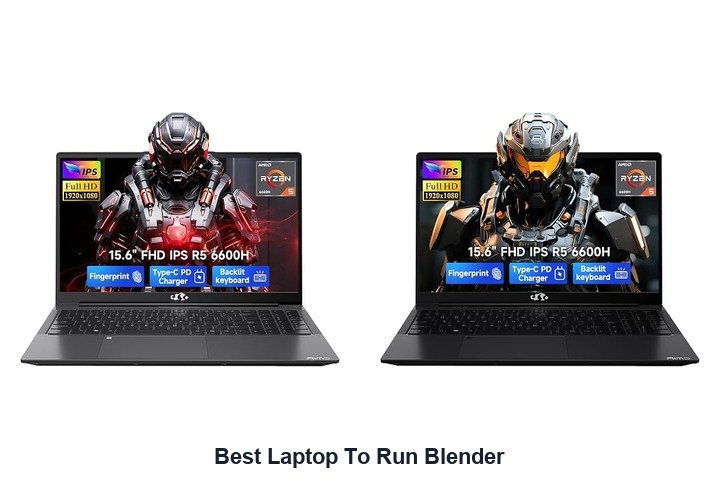

The best laptop to run Blender is essential for artists and designers who demand high performance in 3D modeling and rendering workflows. Choosing the right laptop involves understanding the importance of a robust graphics processing unit, a multi-core CPU, and efficient memory configurations that handle complex scenes and animations without lag. Advanced display technology and cooling systems also play a crucial role in maintaining stability during intensive design tasks.
With evolving hardware capabilities, the challenge lies in selecting a device that balances power and portability for creatives working on the go. This guide explores key technological features, practical use cases, and common pitfalls to avoid, helping you pinpoint the ideal machine for seamless Blender integration.
Dive deeper to discover expert insights and criteria that transform your digital artistry experience.
Best Laptop to Run Blender: Top Picks for 2026
| Image | Product | Buy |
|---|---|---|
Top Picks- 1  | NIMO 15.6 AI Creator Laptop, 6 Core AMD R5-6600H 16GB Best for: Entry-level creators | Check Price On Amazon |
Top Picks- 2  | NIMO 15.6 FHD AI-Creator-Laptop, 32GB RAM 1TB SSD 6-Core AMD Best for: High-performance creators | Check Price On Amazon |
Top Picks- 3  | Dell Precision 7680 Laptop, NVIDIA RTX 2000 Ada 8GB, i7-13850HX, Best for: Professional workstations | Check Price On Amazon |
Top Picks- 4  | Dell Precision 7680 Laptop, NVIDIA RTX 2000 Ada 8GB, i7-13850HX, Best for: Professional workstations | Check Price On Amazon |
Top Picks- 5 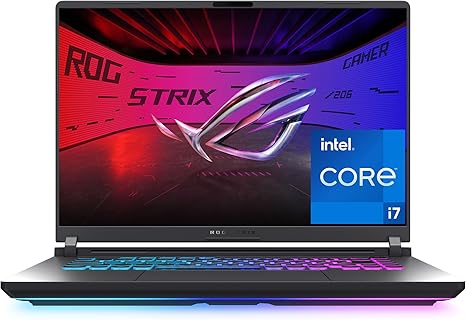 | ASUS ROG Strix G16 (2025) Gaming Laptop, 16” FHD+ 16:10 Best for: Gaming and content creation | Check Price On Amazon |
1. NIMO 15.6 AI Creator Laptop, 6 Core AMD R5-6600H 16GB
Best for: Everyday Creators Seeking Reliable Performance.
The NIMO 15.6 AI Creator Laptop features a 6-core AMD Ryzen 5 6600H processor capable of boosting up to 4.5GHz, offering consistent processing power for tasks in Blender like modeling and light rendering. Its 16GB RAM enables multitasking with ease across demanding creative software.
With a 512GB SSD, this laptop ensures fast boot and load times for large Blender projects. Weighing 4.6 pounds, it balances portability with performance. The integrated AMD Radeon 660M graphics coprocessor handles moderate 3D workloads, and Windows 11 provides a modern interface for productivity.
Pros
- AMD Ryzen 5 6600H enables smooth multitasking
- 16GB RAM supports complex scenes and multitasking
- 512GB SSD offers rapid storage access
- Backlit keyboard aids low-light work sessions
Cons
- Integrated Radeon 660M graphics limits heavy GPU rendering
Ideal for hobbyists and daily Blender users who need a competent laptop for modeling and basic rendering without aggressive power demands. It suits those focused on balanced performance with reasonable portability.
2. NIMO 15.6 FHD AI-Creator-Laptop, 32GB RAM 1TB SSD 6-Core AMD
Best for: Power Users Needing High Memory and Storage.
Equipped with 32GB of RAM and a 1TB SSD, the NIMO 15.6 FHD AI-Creator-Laptop handles large Blender scenes and heavy multitasking effortlessly. Its 6-core AMD Ryzen 5 6600H processor ensures stable performance during intensive creative workflows.
This 3.8-pound laptop runs Windows 11 and uses integrated AMD Radeon 660M graphics for consistent visuals. The full HD display and backlit keyboard expand usability in various environments, while the fingerprint reader enhances security for content creators.
Pros
- 32GB RAM supports extremely complex Blender projects
- 1TB SSD accommodates large asset libraries
- Backlit keyboard enhances usability in dim conditions
- Fingerprint reader provides secure access
Cons
- Integrated graphics may bottleneck high-end GPU rendering tasks
Recommended for Blender professionals and advanced users who juggle extensive models and multitasking. This laptop excels where large storage and memory capacity are critical for uninterrupted creative work.
3. Dell Precision 7680 Laptop, NVIDIA RTX 2000 Ada 8GB, i7-13850HX,
Best for: Creative Professionals Requiring Dedicated GPU Power.
The Dell Precision 7680 offers a dedicated NVIDIA RTX 2000 Ada GPU with 8GB GDDR6 memory, fueling demanding Blender processes like realistic rendering and sculpting with exceptional graphical power. Paired with an Intel i7-13850HX processor, it delivers premium creative performance.
Boasting a spacious 2TB SSD, this 14.02″ x 10.18″ laptop supports massive projects with quick file access. Its 5.9-pound weight reflects its workstation-class build. Anti-glare coating improves visual comfort during long editing sessions, while Windows 11 Pro offers business-grade reliability.
Pros
- NVIDIA RTX 2000 Ada GPU accelerates complex renders
- Intel i7-13850HX provides robust CPU performance
- 2TB SSD enables massive project storage
- Anti-glare display coating reduces eye strain
Cons
- At 5.9 pounds, less ideal for frequent travel
Perfect for dedicated Blender artists and engineers requiring desktop-grade GPU performance in a portable package. It suits professionals engaged in high-fidelity visualization and animation tasks.
4. Dell Precision 7680 Laptop, NVIDIA RTX 2000 Ada 8GB, i7-13850HX,
Best for: Engineers and Designers Needing Balanced High Performance.
This version of the Dell Precision 7680 combines the 8GB NVIDIA RTX 2000 Ada GPU with a 1TB SSD and Intel Core i7-13850HX vPro processor for efficient handling of Blender workloads such as 3D animation and technical modeling.
Its 5.9-pound chassis features anti-glare coating and a numeric keypad to streamline work processes. The GDDR6 graphics RAM facilitates accelerated GPU computations. Windows 11 Pro and versatile connectivity via USB, HDMI, and Thunderbolt deliver a smooth workspace integration.
Pros
- Intel Core i7-13850HX vPro enhances multitasking efficiency
- NVIDIA RTX 2000 Ada dedicated GPU supports GPU-based rendering
- 1TB SSD provides fast loading and ample storage
- Robust connectivity includes Thunderbolt and HDMI
Cons
- Heavier form factor poses portability challenges
Best for Blender users balancing graphic intensity with mobility, such as engineers and designers. It combines workstation power with practical connectivity for versatile creative applications.
5. ASUS ROG Strix G16 (2025) Gaming Laptop, 16” FHD+ 16:10
Best for: Gamers and Creators Demanding Fast Graphics.
Powered by an Intel Core i7-14650HX and NVIDIA GeForce RTX 5060 Laptop GPU with DLSS 4 support, the ASUS ROG Strix G16 offers superior frame rates and GPU-accelerated rendering ideal for Blender’s viewport and render tasks.
A fast 1TB PCIe Gen 4 SSD and 16GB DDR5-5600MHz memory enable quick asset loading and smooth multitasking. The 16-inch 165Hz FHD+ display delivers crisp detail and fluid visuals, while Tri-Fan Technology helps maintain performance under load.
Pros
- RTX 5060 GPU with DLSS 4 boosts rendering and viewport refresh
- Fast 16GB DDR5 RAM facilitates intensive workflows
- 1TB PCIe Gen4 SSD offers fast storage speeds
- 165Hz high-refresh-rate display enhances visual fluidity
Cons
- Heavier weight at 2.65 kg reduces maximum portability
Ideal for Blender users who also game or require brisk graphical responsiveness. This laptop is great for creatives who want both real-time 3D work and gaming capabilities.
6. NIMO 15.6 Gaming-Creator-Laptop, 8-Core AMD Ryzen 7 8745HS 16GB RAM

Best for: Creators Needing Efficient AI and Graphics Performance.
The NIMO 15.6 Gaming-Creator Laptop harnesses the AMD Ryzen 7 8745HS with a 45W TDP and Radeon 780M integrated graphics using RDNA 3 architecture, offering powerful AI-accelerated Blender performance at a desktop level.
Featuring 16GB RAM and a 1TB SSD, the system supports sizable Blender projects and fluid multitasking. At 3.8 pounds, it balances portability with power. Backlit keyboard and fingerprint recognition facilitate secure, ergonomic use during creative sessions.
Pros
- Ryzen 7 8745HS with 45W TDP delivers sustained performance
- Radeon 780M RDNA 3 integrated graphics accelerate GPU tasks
- 16GB RAM supports demanding Blender workloads
- Fingerprint reader adds security for sensitive projects
Cons
- Lacks dedicated GPU, limiting high-end rendering speeds
Suited for content creators who rely on efficient AI and balanced CPU-GPU processing for Blender. Ideal for users who value mobility with strong integrated graphics performance.
7. Acer Nitro V 16S AI Gaming Laptop | AMD Ryzen

Best for: AI-Focused Gamers and Developers Seeking GPU Strength.
The Acer Nitro V 16S AI model offers a powerful AMD Ryzen 7 260 CPU that delivers 38 AI Overall TOPS alongside an NVIDIA GeForce RTX 5060 GPU with Blackwell architecture, perfect for Blender users requiring cutting-edge ray tracing and AI acceleration.
Its 1TB SSD and 8GB GDDR7 memory ensure ample storage and rapid processing. The backlit keyboard enhances usability, and the thin 0.79-inch profile facilitates easier portability without compromising connectivity options essential for content creation.
Pros
- NVIDIA RTX 5060 with Blackwell architecture enables advanced ray tracing
- AMD Ryzen 7 260 CPU offers high AI performance
- 8GB GDDR7 memory enhances graphics workload handling
- Compact 0.79-inch thickness balances portability and power
Cons
- Weight of 4.6 pounds may hinder frequent travel
Best for Blender users combining AI-enabled rendering with moderate portability. It’s a solid choice for creators blending gaming and content development.
8. Portable Blender, Personal Blender for Smoothies & Shakes, Cordless, 33oz

Best for: Not Applicable – Personal Blender Device.
With a 12-blade configuration and a large 33oz BPA-free container, this portable blender offers vigorous blending power for smoothies and shakes, designed for convenient transport to gym or office locations.
The cordless design features USB-C charging for modern convenience. Its lightweight and compact form factor support quick usage anywhere. However, this product is unrelated to computing and Blender software needs.
Pros
- Powerful motor blends fruits and ice smoothly
- 33oz capacity accommodates larger servings
- Cordless operation with USB-C charging
- Compact and lightweight for on-the-go use
Cons
- Not a computing device; unusable for Blender software
While excellent for personal beverage preparation, this blender is irrelevant for Blender 3D software users and should not be considered in the context of Blender laptop requirements.
9. Dell 5420 Latitude Laptop 14″ FHD (1920×1080) Notebook, 11th Gen

Best for: Certified Refurbished Business and Student Use.
The Dell 5420 Latitude offers an 11th Gen Intel processor paired with Intel Iris Xe integrated graphics, suitable for basic Blender tasks and educational projects. Its 512GB SSD promotes quick data access within a compact silver chassis weighing just 3 pounds.
Running Windows 11 Pro, it presents a 14″ FHD display with DDR4 memory. The laptop’s certification process ensures functionality akin to new, backed by a 90-day warranty, making it a reliable choice for entry-level Blender users and students.
Pros
- Lightweight 3-pound design enhances portability
- 512GB SSD provides fast file storage
- Intel Iris Xe graphics enable entry-level 3D work
- Certified Refurbished for tested quality assurance
Cons
- Integrated graphics insufficient for complex Blender rendering
Suitable for students or casual Blender users who prioritize portability and dependable performance for modeling and simple rendering tasks in academic settings.
10. Acer Nitro 16S AI Copilot+ PC Gaming Laptop | AMD

Best for: High-End Gamers and Power Users Seeking Top GPU.
The Acer Nitro 16S AI Copilot+ features an AMD Ryzen AI 9 365 processor coupled with an NVIDIA GeForce RTX 5070 Ti GPU with 12GB GDDR7 memory, delivering top-tier GPU rendering and AI-assisted workflows for Blender creators demanding premium speed and detail.
This laptop includes a spacious 2TB SSD for extensive project storage and Windows 11 Home with advanced security features. Weighing 4.8 pounds and equipped with a backlit keyboard and memory card slot, it supports intensive creative and gaming sessions with seamless connectivity.
Pros
- NVIDIA RTX 5070 Ti with 12GB GDDR7 accelerates detailed rendering
- AMD Ryzen AI 9 365 processor provides powerful AI computing
- 2TB SSD offers massive, fast-access storage
- Backlit keyboard and memory card slot enhance usability
Cons
- 4.8-pound weight may reduce portability for some users
Excellent for expert Blender artists and gamers who need cutting-edge GPU capability combined with AI support. Ideal for handling highly detailed scenes, animations, and AI-powered workflows.
How to Choose the Right Laptop for Blender
Power and performance essentials
The most critical aspect to prioritize when selecting a laptop for Blender is the processor, as rendering speed significantly depends on CPU power. Opt for laptops equipped with high-core-count processors offering at least six cores and high clock speeds above 3.0 GHz to handle complex rendering tasks efficiently. The graphics card plays a pivotal role in real-time viewport performance and accelerating Cycles rendering, so choose models with dedicated GPUs that feature modern architectures and ample VRAM, specifically 6GB or more.
Memory is equally important; 16GB of RAM constitutes the baseline for smooth multitasking and handling intricate scenes, while 32GB or above is ideal for professionals working on heavyweight projects. Therefore, a laptop with a hexa-core or higher CPU, robust dedicated GPU, and at least 16GB RAM delivers the performance Blender users demand.
Display quality and size
When it comes to the display, color accuracy and resolution are vital for precise modeling and texturing. A 15.6-inch screen strikes the right balance between portability and workspace, though larger 17-inch displays benefit those focusing on detailed sculpting and layout. Prioritize laptops with IPS panels for their superior color reproduction and wider viewing angles, which aid in accurate shading and lighting adjustments compared to TN panels.
For resolution, a full HD (1920 x 1080) is the minimum, but a QHD or 4K panel elevates clarity and detail visibility crucial for fine work. In conclusion, a 15.6-inch or bigger IPS display with at least full HD resolution is the optimal choice for Blender users who require both color fidelity and ample screen real estate.
Storage solutions
Storage directly impacts productivity when working with large Blender projects and assets. Solid-state drives are non-negotiable as they drastically reduce loading times and speed up saving processes, providing a fluid workflow. Target at least 512GB of SSD storage to accommodate project files and resource-heavy textures, with 1TB or more recommended for those managing extensive portfolios or heavy datasets.
External storage compatibility is also essential for seamless offloading and backups; ensure the laptop supports high-speed interfaces such as USB-C or Thunderbolt to maintain fast transfer rates. To summarize, a minimum of 512GB SSD paired with versatile external drive support guarantees efficient project handling in Blender.
Thermal management and cooling
Effective cooling is critical during intensive rendering and simulation tasks to sustain performance and prevent damage. Choose laptops with advanced heat dissipation systems that combine multiple fans and heat pipes to maintain internal temperatures under control during prolonged workloads. Fan noise levels should be reasonable to avoid distractions, so models that balance cooling with quiet operation are preferable.
Thermal throttling can drastically reduce processing capabilities, causing lag and longer render times, so ensuring robust thermal management is non-negotiable. Therefore, select a laptop featuring a sophisticated cooling solution with well-engineered airflow pathways to preserve consistent Blender performance during extended sessions.
Portability and battery life
Portability plays a significant role for artists and professionals needing mobility without sacrificing performance. Look for lightweight yet sturdy materials like aluminum chassis to keep the device easy to carry without compromising durability. Battery life should support around six to eight hours of moderate use to handle fieldwork efficiently; anything less impedes workflow flexibility.
Chargers with compact designs and support for fast charging or high-wattage power delivery enhance convenience by minimizing downtime. Ultimately, the best laptop balances a sub-5-pound weight, metal build, solid battery endurance, and smart charging features to empower Blender users working across diverse environments.
Which Should You Choose?
- If you need smooth multitasking and moderate 3D modeling, choose a laptop with a 6-core AMD Ryzen 5 processor and at least 16GB of RAM.
- If your workflow involves handling large projects or multitasking with heavy software, opt for a machine with 32GB RAM and a fast SSD for ample storage and high-speed performance.
- If you require top-tier GPU performance for rendering and complex simulations, select a laptop featuring a high-end NVIDIA RTX series graphics card paired with a powerful Intel i7 CPU.
- If you want a balance between gaming power and creative work, consider laptops equipped with advanced AMD Ryzen 7 processors combined with dedicated RDNA 3 graphics.
Quick Best Laptop To Run Blender Buying Checklist
- CPU Power: Ensure the laptop has a multi-core processor with high clock speed for faster rendering.
- GPU Capability: Look for a dedicated graphics card compatible with Blender’s rendering engines.
- RAM: Minimum 16GB RAM, preferably 32GB, for handling complex projects smoothly.
- Display Quality: Choose a high-resolution IPS panel with good color accuracy for accurate modeling and texturing.
- Storage Type: Prioritize SSDs for faster file access and project loading times.
- Cooling System: Efficient thermal design prevents overheating during demanding Blender tasks.
Frequently Asked Questions
What Cpu Specs Are Best For Running Blender Effectively?
A laptop with a multi-core processor, such as a high-frequency Intel i7 or AMD Ryzen 7, is best for running Blender effectively. These CPUs accelerate rendering tasks and improve viewport responsiveness, crucial for complex 3D projects.
How Important Is A Dedicated Gpu For Blender Performance?
A dedicated GPU significantly boosts Blender’s performance by handling render calculations and viewport shading. Graphics cards like NVIDIA’s RTX or AMD Radeon series enable faster rendering and smoother real-time previews.
Why Is Ram Capacity Vital When Choosing A Laptop For Blender?
RAM is vital because Blender uses it to manage active scenes and assets. Having at least 16GB ensures smooth multitasking and handling of detailed models, while 32GB is ideal for more complex workflows.
Does Screen Quality Matter For Blender Workstations?
Screen quality matters greatly since color accuracy and resolution affect modeling and texturing precision. An IPS panel with full HD or higher resolution helps artists see more detail and true colors.
What Storage Type Is Recommended For Blender Laptops?
SSDs are recommended for Blender laptops because they offer faster read/write speeds than HDDs. This translates to quicker project loading, saving, and overall performance improvements during workflow.
Final Suggestions
Choosing the best laptop to run Blender ensures smooth 3D modeling, rendering, and animation with powerful performance and precise visuals. These laptops combine robust CPUs, dedicated GPUs, ample RAM, and sharp displays to meet demanding creative needs. Invest wisely to enhance your Blender experience and bring your creative projects to life with confidence.