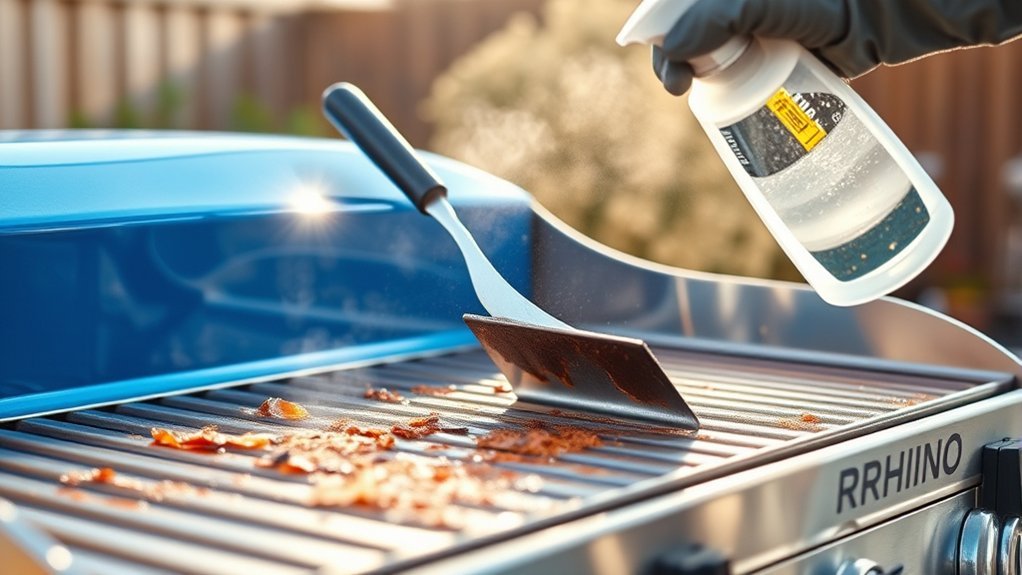

Cleaning your Blue Rhino griddle isn’t just about wiping off grease; it’s a precise process that ensures safety and longevity.
Proper Blue Rhino griddle cleaning requires careful attention to detail to avoid damage and maintain performance. You can’t rush through it or use harsh tools without risking harm to the surface.
To maintain optimal performance and avoid costly repairs, you’ll need to follow specific steps—from disconnecting the propane to seasoning the surface properly.
Understanding these details will make all the difference in your griddle’s upkeep.
Taking the time to clean it correctly helps extend its life and keeps your cooking area safe.
Key Takeaways
- Ensure the griddle is completely cool and disconnect the propane tank before cleaning to avoid hazards.
- Scrape off food debris and grease with a griddle scraper, then clean using warm soapy water and a non-abrasive pad.
- Rinse the griddle thoroughly with clean water and dry it completely using a microfiber towel to prevent rust.
- Season the dry surface by heating to 350°F, applying a thin layer of high-smoke point oil, then heating for 30 minutes.
- Perform daily cleaning to prevent grease buildup and deep clean monthly or based on usage frequency for optimal maintenance.
How To Clean Your Blue Rhino Griddle
How do you effectively clean your Blue Rhino griddle to maintain optimal performance? Start by ensuring the griddle is completely cool to adhere to cleaning safety standards. Disconnect the propane tank to eliminate fire hazards.
Scrape off food debris and grease using a metal spatula, focusing on the cooking surface. Next, apply a degreaser or warm soapy water, scrubbing with a non-abrasive pad to avoid damaging the surface.
Remove food and grease with a metal spatula, then clean with a degreaser and a gentle scrub pad.
Rinse thoroughly with clean water and dry with a cloth to prevent rust. Regular cleaning prevents buildup that impairs heat distribution and causes flare-ups, essential for grill maintenance.
Finally, inspect burners and grease traps, clearing any blockages. By following these precise steps, you’ll ensure your Blue Rhino griddle operates efficiently and safely every time.
The Tools You’ll Need To Clean Your Blue Rhino Griddle
Which tools do you need to clean your Blue Rhino griddle effectively? To maintain its glossy finish and prevent rust, gather these essential items:
- Griddle scraper for removing stuck-on debris without scratching the surface.
- Non-abrasive scrub pad to gently clean while preserving the finish.
- Heat-resistant gloves to protect your hands during cleaning.
- Food-safe oil applied post-cleaning to create a protective barrier against rust.
Using these tools methodically allows you to keep your Blue Rhino griddle in optimal condition. The scraper clears residue efficiently, while the scrub pad refines the surface. Gloves ensure safety, especially when handling a warm griddle. Finally, applying oil seals the surface, enhancing rust prevention and maintaining that sleek, glossy finish. Stick to these tools for precise, effective cleaning every time.
How To Remove Grease And Food Residue Without Damaging Your Griddle
Why does removing grease and food residue carefully matter for your Blue Rhino griddle? Proper cleaning prevents buildup that can lead to uneven heating and corrosion. You need to use gentle scrapers and warm soapy water to avoid scratching the cooking surface.
Start by scraping off large debris, then apply a non-abrasive cleaner paired with a soft cloth. This idea pair one ensures grime loosens without damage. Rinse thoroughly and wipe dry with a microfiber towel, the second idea pair two, to prevent rust.
| Step | Tool | Purpose |
|---|---|---|
| Scraping | Plastic scraper | Remove large residue |
| Cleaning | Soft cloth + soap | Dissolve grease safely |
| Drying | Microfiber towel | Prevent surface corrosion |
How To Season Your Blue Rhino Griddle After Cleaning
When should you start seasoning your Blue Rhino griddle after cleaning? Begin immediately once the surface is thoroughly dry. Proper seasoning after cleaning is crucial for extending the lifespan and improving performance.
Start seasoning your Blue Rhino griddle immediately after it’s completely dry for best performance and longevity.
Follow these steps for effective seasoning after cleaning:
- Preheat the griddle on medium heat until it reaches around 350°F (175°C).
- Apply a thin layer of high-smoke point oil evenly across the cooking surface.
- Let the oil polymerize by heating the griddle for 30 minutes, forming a protective non-stick layer.
- Allow the griddle to cool naturally before wiping off any excess oil with a clean cloth.
Incorporate this into your regular maintenance routines to ensure optimal cooking results and prevent rust formation.
How To Keep Stubborn Build-Up Off Your Blue Rhino Griddle
Preventing stubborn build-up on your Blue Rhino griddle requires consistent attention to cleaning techniques and surface care. You need to avoid residue accumulation that compromises cookware maintenance and puts grill safety at risk.
Always scrape off food debris immediately after use while the surface is still warm, but not hot. Use a griddle scraper and a nylon scrub pad to avoid damaging the surface.
| Action | Purpose |
|---|---|
| Immediate scraping | Removes fresh food particles |
| Use nylon scrub pad | Prevents surface scratches |
| Apply cooking oil | Creates a protective barrier |
| Avoid harsh chemicals | Preserves seasoning, safety |
Adhering to this routine ensures your griddle remains effective, safe, and easy to clean without stubborn build-up.
How Often You Should Clean Your Blue Rhino Griddle
You should clean your Blue Rhino griddle daily to prevent grease buildup and maintain optimal cooking performance.
Performing a deep cleaning once a month helps remove stubborn residues that daily cleaning might miss. Consistent maintenance extends the griddle’s lifespan and ensures safe, efficient operation.
Daily Cleaning Benefits
How often should you clean your Blue Rhino griddle to maintain optimal performance? Daily cleaning is essential. By incorporating consistent daily cleaning into your maintenance routine, you’ll safeguard your griddle’s efficiency and longevity.
Here are four key benefits of daily cleaning:
- Prevents buildup of grease and food particles, reducing fire hazards.
- Maintains even heat distribution by avoiding residue accumulation.
- Extends the lifespan of cooking surfaces and components.
- Ensures hygienic cooking conditions, minimizing contamination risk.
Following these daily cleaning maintenance tips will help you operate your Blue Rhino griddle safely and effectively. Skipping this step can cause performance issues and costly repairs.
Stay methodical: wipe down the surface, scrape off debris, and rinse after every use to keep your griddle in peak condition.
Deep Cleaning Frequency
While daily cleaning keeps your Blue Rhino griddle running smoothly, scheduling regular deep cleaning is necessary to address stubborn grease, carbon buildup, and hard-to-reach areas. Establishing a consistent frequency cadence for deep cleaning enhances performance and prolongs the griddle’s lifespan.
Typically, deep cleaning should occur after every 20 to 30 hours of use or at least once a month, depending on usage intensity.
| Usage Level | Deep Cleaning Frequency | Key Focus Areas |
|---|---|---|
| Light (weekly) | Monthly | Carbon buildup, grease traps |
| Moderate (biweekly) | Biweekly | Burners, drip trays |
| Heavy (daily) | Weekly | Full disassembly, grease |
| Commercial Use | After each use | Complete deep clean |
Adhering to this cadence ensures optimal functionality and safety.
Frequently Asked Questions
Can I Use Soap to Clean My Blue Rhino Griddle?
Yes, you can use soap for cleaning your Blue Rhino griddle. Employ warm cleaning water mixed with mild soap, then gently scrub to remove residue.
Rinse thoroughly to avoid soap buildup that could affect cooking performance.
Is It Safe to Clean the Griddle While It’s Still Warm?
You wouldn’t touch a hot stove, right? For cleaning safety, warm cleanup is okay if you’re cautious. Use a scraper and gloves to avoid burns, but avoid soap until it cools to protect the griddle’s seasoning and surface integrity.
What Should I Do if My Griddle Rusts?
If your griddle rusts, scrub the rust with a steel wool pad, then reseason the surface.
For rust prevention, regularly oil the griddle after cleaning and follow maintenance tips to keep it dry and covered when not in use.
Can I Clean My Blue Rhino Griddle With a Dishwasher?
You can’t put your Blue Rhino griddle in the dishwasher. It would survive a hurricane better than that! Instead, follow cleaning griddle history methods: scrape residue, use mild soap, and choose dishwasher alternatives like hand washing with warm water.
How Do I Store My Blue Rhino Griddle After Cleaning?
You should dry your Blue Rhino griddle thoroughly, then apply a thin oil layer for weatherproofing. Store it in a cool, dry place using a fitted cover. These storage tips prevent rust and prolong its lifespan.
Conclusion
Cleaning your Blue Rhino griddle regularly not only extends its lifespan but also improves cooking performance. Did you know that 70% of griddle damage comes from neglecting routine cleaning? By following precise steps—cooling, scraping, degreasing, rinsing, drying, and seasoning—you prevent buildup and rust.
Consistent maintenance guarantees safety and flavor quality, making your griddle a reliable tool for years. Don’t underestimate the power of methodical care; it’s essential for optimal griddle function.
In conclusion, proper cleaning is key to keeping your Blue Rhino griddle in top condition and ensuring it delivers the best cooking results every time.